Why Bottled Water Demand Is Rising in Urban India – Market Analysis
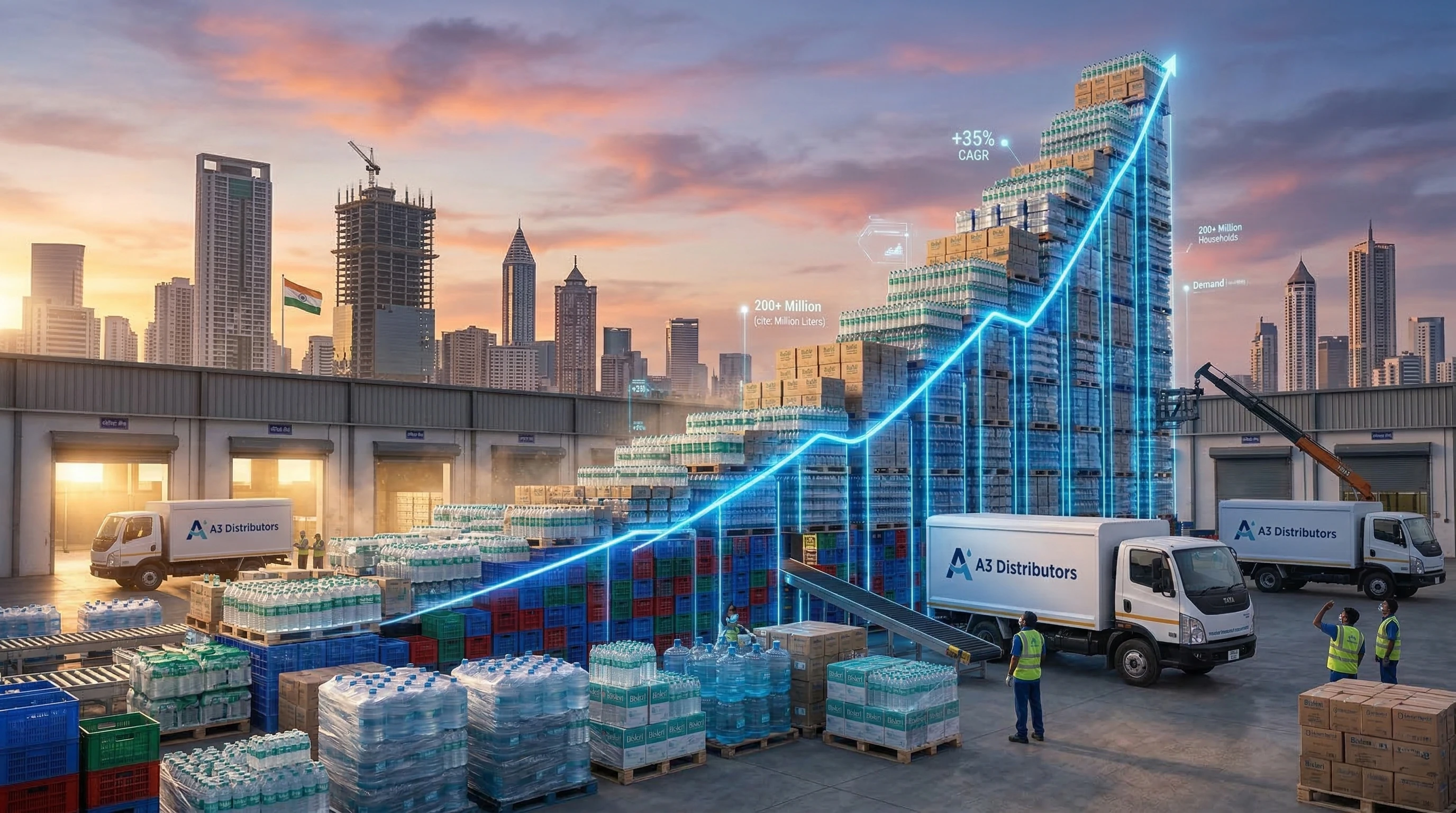
India's bottled water market is experiencing explosive growth. From a niche product consumed primarily by travelers and the wealthy, packaged drinking water has become an essential commodity for millions of urban Indians. Market research indicates the packaged water sector is growing at 12-15% annually, significantly outpacing overall beverage market growth of 7-8%.
Understanding the drivers behind this surge is crucial for businesses looking to capitalize on market opportunities. This analysis explores the fundamental reasons why urban Indians increasingly choose packaged water over municipal sources.
1. Deteriorating Municipal Water Quality
The Core Problem: Despite decades of investment, India's municipal water supply systems fail to meet basic safety and quality standards in most urban areas.
- Contamination Issues: Bacterial contamination, heavy metals, and industrial pollutants are frequently detected in municipal water
- Aging Infrastructure: Pipe leaks and seepage contaminate water en route to consumers
- Inconsistent Quality: Water quality varies significantly by location and season
- Lack of Advanced Treatment: Municipal systems lack modern filtration technology to remove emerging contaminants
Real-world example: Mumbai municipal water, despite being relatively better than many Indian cities, frequently shows high bacterial counts and turbidity levels that exceed WHO standards, particularly during monsoon season.
2. Unreliable Municipal Supply Schedules
Unpredictable Availability: Municipal water supply is irregular and unpredictable, often available only a few hours per day in many areas.
- Bangalore: 2-3 hour water supply windows in many neighborhoods
- Delhi: Chronic water shortage during summer months
- Mumbai: Municipal supply cuts during drought periods
- Pune: Seasonal availability fluctuations creating supply anxiety
This unpredictability forces both individuals and businesses to rely on alternative sources. Packaged water eliminates the uncertainty and dependency on municipal schedules.
3. Rising Health and Hygiene Consciousness
Health-Aware Consumer Base: Urban Indians, particularly younger demographics and upper-income groups, are increasingly conscious of health risks associated with contaminated water.
- Waterborne diseases (cholera, typhoid, hepatitis A) remain significant health risks despite urbanization
- Growing awareness of fluoride, arsenic, and other contaminant health impacts
- Fitness and wellness trends promoting pure water consumption
- Social media campaigns highlighting water quality risks
Parents increasingly view packaged water as a necessary health investment for their children. Health-conscious professionals prefer guaranteed pure water over municipal sources.
4. Growing Urban Population and Density
Unprecedented Urbanization: India's urban population is rapidly expanding, and municipal infrastructure cannot keep pace.
- Current urban population: 550+ million (35% of India)
- Expected by 2050: 900+ million (50% of India)
- Urban infrastructure gap widening faster than government expansion
- New residential areas often have inadequate water infrastructure
This gap creates a structural dependency on packaged water that will persist regardless of municipal improvements.
5. Commercial and Institutional Demand Surge
Business Sector Growth: Commercial establishments are major drivers of packaged water demand.
- IT and Corporate Offices: Quality-conscious employers provide bottled water as employee benefit
- Hospitality Sector: Hotels, restaurants, and cafes require consistent quality water
- Healthcare Facilities: Hospitals must use purified water for medical and hygiene purposes
- Educational Institutions: Schools and colleges increasingly install water dispensers
- Retail and E-commerce: Growing warehouse and logistics facilities
Commercial sector demand now represents 40-45% of urban packaged water consumption, significantly higher than residential.
6. Middle-Class Expansion and Purchasing Power
Income Growth and Affordability: India's expanding middle class (growing from 300 million to 550+ million by 2030) has increased ability to afford packaged water.
- Middle-class purchasing power growing at 8-10% annually
- Packaged water price within reach of 70%+ of urban population
- Payment flexibility (monthly billing, credit terms) making affordability easier
- Subscription and delivery models reducing convenience barriers
7. Successful Marketing and Brand Building
Industry Growth Narrative: Major players (Bisleri, Aquafina, Kinley) have invested heavily in brand building and consumer education.
- Aggressive marketing emphasizing purity and health benefits
- Celebrity endorsements and wellness associations
- Visible quality certifications and safety messaging
- Emotional branding connecting safe water to family health
These marketing investments have fundamentally changed urban Indians' perception of packaged water from luxury to necessity.
8. Government Policy Support
Regulatory Environment: Government policies have inadvertently supported bottled water growth by highlighting municipal water quality issues.
- Water quality testing reports highlighting contamination
- Health ministry warnings about waterborne diseases
- Licensing regulations establishing packaged water as legitimate industry
- Corporate wellness program endorsements
Market Projections and Opportunities
Current Market Size: India's packaged water market estimated at $2.5-3 billion annually
Growth Projection: Expected to reach $5-6 billion by 2030 at current growth rates
Per Capita Consumption Growth: Currently 2-3 liters annually per urban Indian; expected to rise to 5-8 liters by 2030
Business Opportunities:
- Expansion into tier-2 and tier-3 cities
- Product innovation (mineral water, functional beverages)
- Delivery model innovation (subscription, automation)
- Sustainability focus (plastic alternatives)
- Premium segmentation (health-focused water variants)
Conclusion
Bottled water demand in urban India is not a temporary trend but a structural shift driven by fundamental factors: unreliable municipal systems, health consciousness, urban growth, commercial sector expansion, and rising incomes. For businesses in the water and beverage distribution sector, this represents a massive and sustained growth opportunity. The question isn't whether demand will continue to grow, but how quickly businesses can innovate and adapt to serve this rapidly expanding market.